💹 Major Currency Snapshot:
USDZAR: 17.37
EURZAR: 20.44
GBPZAR: 23.46
Introduction:
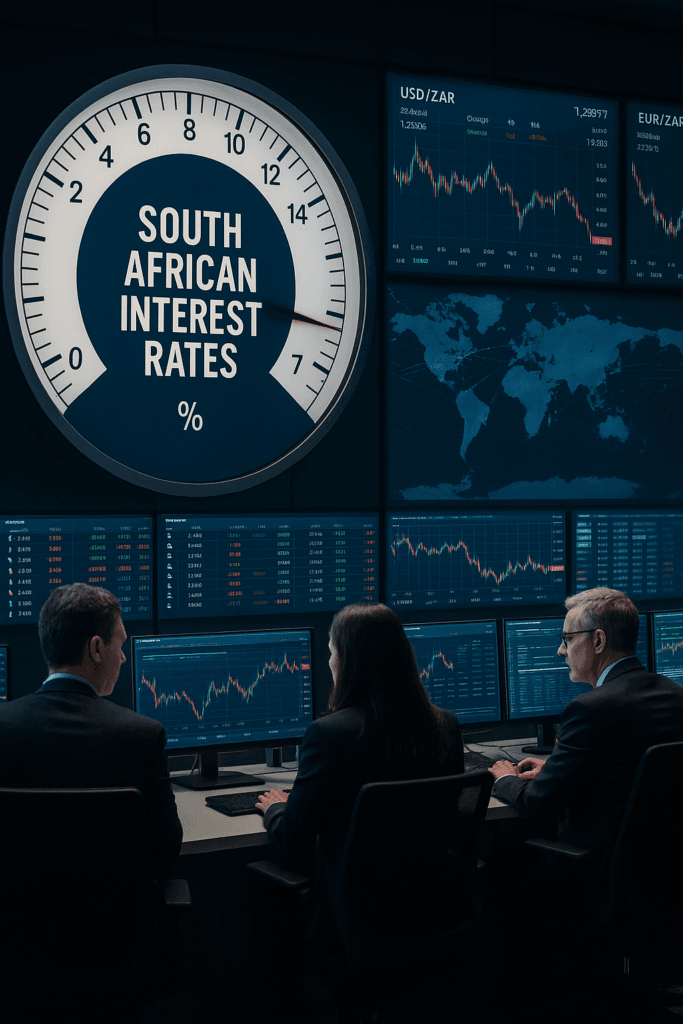
The recent decision by the South African Reserve Bank (SARB) to hold South African interest rates steady at 7.00% marks a critical strategic pause for businesses engaged in international trade. While the domestic economic landscape shows encouraging signs—with the inflation rate in SA unexpectedly cooling in August—the SARB is prioritizing a long-term goal of anchoring expectations around a lower 3% inflation target. This conservative stance means that decision-makers in the imports and exports sectors must continue to navigate high borrowing costs in the short term, but should watch for potential long-term benefits of financial stability. Observing the stability and volatility within the foreign exchange market is paramount, particularly as the local currency reacts to global shifts and lingering uncertainties over tariffs and international monetary policy. This approach, though offering no immediate relief, is deliberate medicine aimed at creating a predictable environment for trade and investment down the line.
Key takeaways from sources:
- Interest Rates Held Steady, Long-Term Target Shifted: The SARB held the repo rate at 7.00% and the prime lending rate at 10.50%, a decision driven by the Bank’s newly emphasized preference to stabilize the inflation rate in SA at 3%, the bottom end of the official target band. This policy aims to build market confidence for sustainably lower long-term South African interest rates, though it means current high borrowing costs persist in the short run.
- Trade Sector Must Monitor Volatile Foreign Exchange: While the SARB incorporates a stronger exchange rate assumption into its inflation forecast, the local currency remains susceptible to global shifts. Businesses reliant on international transactions must closely monitor foreign exchange markets; current pairings show the Dollar to Rand at 17.37, the Euro to Rand remaining steady at 20.44, and the Pound to Rand strengthening marginally to 23.46.
- Global Trade Pressures Persist for Imports and Exports: Despite global markets showing resilience, the long-term outlook remains high risk for emerging economies. SMEs involved in international trade must account for lingering uncertainty from U.S. global tariffs on imported goods. Economists warn that the impact of these tariffs on global supply chains for exports is likely to be a “long, long tail adjustment,” meaning ongoing trade volatility should be anticipated.
- Expectation Management is Key to Future Rate Cuts: The current hold on South African interest rates is a deliberate strategy to assess how previous rate cuts have affected the economy and how inflation expectations evolve. If public expectations regarding the inflation rate in SA adjust more slowly than the SARB forecasts towards the 3% target, the policy stance will likely remain tighter, potentially resulting in fewer future rate cuts and moderately lower growth. The SARB seeks to finalize inflation target reform as soon as practical to better anchor these expectations.
Need a business partner that can help mitigate exchange rate risk?
Book an appointment with one of our treasury specialists.
If you are not subscribed yet, make sure to do so by clicking HERE and signing up.
Sources referenced:
- Reserve Bank votes to keep interest rates the same – Daily Investor
- Reserve Bank chooses to hold rates – BusinessTech
- South Africa Central Bank Holds Rates, Supporting Lower CPI Goal – Bloomberg
- Why SARB’s interest rate hold could benefit consumers in the long run
- Global economy takes Trump shocks in stride, for now
- Dollar steadies as investors consider post-Fed outlook, focus turns to BOJ meeting